
1Nov 2026
7 Ways to Customise Your Shed Before You Order
A shed isn’t something you buy every day, so it makes sense to get the design right from the start.
Whether you’re setting up a garage, workshop, farm shed, or backyard storage space, the right customisations can make a big difference to how you use it.
From choosing the right doors to adding windows, insulation, and extra storage, there are plenty of ways to make your shed work better for you.
The best part? You can plan these features before placing your order, rather than trying to make changes once your shed is ordered.
Here are seven practical ways to customise your shed and create a space that suits your property, lifestyle, and budget.
If you’re looking for custom sheds in Australia, Best Sheds lets you explore a range of custom shed designs to create a practical space tailored to your requirements.
Why Customise Your Shed Before Ordering?
Not every shed needs the same features.
Someone storing gardening equipment will have different requirements from someone parking a caravan.
That’s why choosing a shed based on size alone isn’t always the best approach.
Customising your shed before ordering allows you to:
- Make better use of your space: Choose dimensions and layouts that suit your equipment and activities.
- Improve accessibility: Position doors and openings where they’re most convenient.
- Increase comfort: Consider natural light, ventilation, and insulation.
- Match your property: Select colours and finishes that complement your home.
- Plan for future needs: Leave room for additional storage, vehicles, or equipment.
- Avoid unnecessary modifications: Make important design decisions before manufacturing begins.
1. Choose the Right Shed Size and Height
One of the first things to customise is your shed’s dimensions.
It might be tempting to choose a standard size, but it’s worth thinking about what you’ll actually be storing or doing inside.
For example, a shed designed for general household storage won’t necessarily have enough room for a large vehicle, workshop equipment, or machinery.
Before choosing your dimensions, consider:
- What will you use the shed for?
- What are the largest items you’ll store inside?
- Will you need room to move around vehicles or equipment?
- Do you want additional space for shelving or workbenches?
- Could your storage needs change in the future?
Height is just as important as floor space.
If you’re planning to store a caravan, boat, or tall vehicle, make sure your shed has sufficient wall height and door clearance.
Our tip: Measure your largest items first, then allow extra room for comfortable access and movement.
2. Customise Your Shed Doors for Easier Access
Doors might seem like a small detail, but they can make a huge difference to how practical your shed is.
Think about how often you’ll enter the shed, what you’ll be moving in and out, and whether you need access from more than one side.
Some options worth considering include:
-
Roller Doors
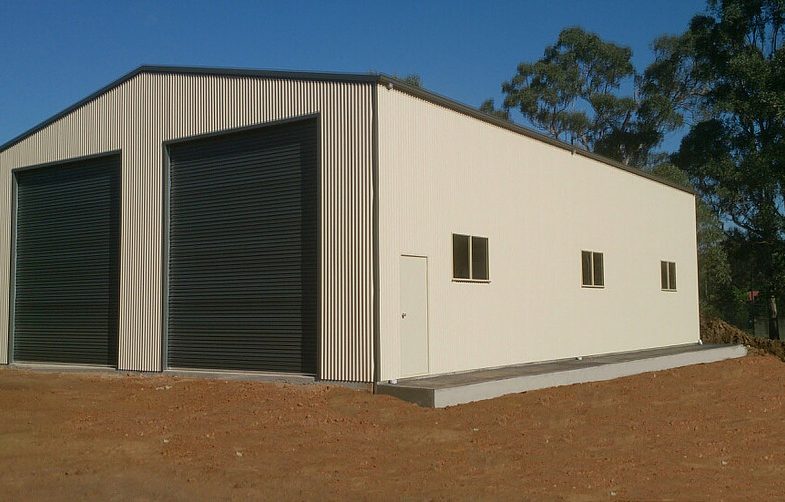
Roller doors are ideal for sheds used to store cars, trailers, machinery, and larger equipment.
You can customise their position and dimensions to suit your access requirements.
For example, a wider roller door could make it easier to reverse a trailer into your shed without needing to manoeuvre through a narrow opening.
-
Personal Access Doors
Don’t want to open a large roller door every time you need something?
A personal access door provides a convenient entry point for everyday use.
This can be especially useful for workshops or storage sheds where you’re regularly coming and going.
-
Automatic Doors
If you use your shed frequently, an automatic roller door can make access more convenient.
Instead of manually opening and closing the door, you can operate it using a remote control.
Our tip: Think about your driveway and how you’ll approach the shed. The right door position can make parking and accessing your equipment much easier.
3. Add Windows for Natural Light and Ventilation
If you’re planning to spend time working inside your shed, natural light can make the space more comfortable.
Without windows, enclosed sheds can feel dark, particularly when the doors are closed.
Adding windows during the design stage can help improve visibility and reduce your reliance on artificial lighting during the day.
Windows are particularly useful for:
- Home workshops
- Hobby spaces
- Garden sheds
- Storage areas you access regularly
- Sheds used for maintenance and repairs
Sliding windows can also provide additional airflow when opened.
Before choosing their position, consider where you’ll place shelving, workbenches, and other equipment.
You don’t want a window sitting directly behind a tall storage cabinet.
Our tip: Position windows where they’ll provide useful natural light without interfering with your storage layout.
4. Pick Colours That Complement Your Property
Your shed doesn’t have to look like an afterthought.
Choosing the right colours can help it blend with your home, fencing, landscaping, and other outdoor structures.
Whether you prefer a subtle, neutral finish or something with more character, colour is one of the easiest ways to personalise your shed.
Best Sheds offers a selection of colours, including:
- Smooth Cream
- Mist Green
- Heritage Red
- Mountain Blue
- Slate Grey
- Off White
- Monolith
You can also consider different colours for the roof, walls, doors, and trims, depending on your selected design.
-
How Do You Choose the Right Shed Colour?
Start by looking at your existing property.
If your house has a dark roof and neutral exterior, you might prefer a shed with a similar colour scheme.
For rural properties, earthy tones can help the shed sit naturally within the landscape.
Alternatively, a contrasting colour can give your shed a more distinctive appearance.
Our tip: Don’t choose a colour based on a small online image alone. Compare your preferred finishes with your home’s existing colours and, where possible, view physical samples.
Need inspiration? Read our shed colour guide to explore the different finishes and find one that suits your property.
5. Consider Insulation for Year-Round Comfort
If you’re planning to use your shed as a workshop, hobby area, or space where you’ll spend extended periods, insulation is worth considering.
Australian temperatures can vary significantly throughout the year, and an uninsulated steel shed can become uncomfortable during hot or cold weather.
Insulation can help reduce heat transfer through the roof and walls, making internal temperatures easier to manage.
It may also help reduce condensation under suitable conditions.
-
When Is Shed Insulation Worth It?
Consider insulation if you’re planning to:
- Work inside your shed regularly
- Store items sensitive to temperature changes
- Use the space for hobbies or projects
- Create a more comfortable workshop
- Improve the shed’s thermal performance
If you’re only using the shed to store basic gardening tools, insulation might not be a priority.
However, if you plan to spend several hours inside each week, it could be a worthwhile addition.
Our tip: Decide whether you want insulation before ordering so the appropriate materials and design requirements can be considered from the start.
Explore Best Sheds’ storage shed options to learn more about available features and accessories.
6. Customise Your Roof Style and Add a Lean-To
Your shed’s roof does more than protect what’s underneath it. It also influences the shed’s appearance, internal space, and overall layout.
Depending on your shed type, site requirements, and design, you may have different roof styles to consider.
-
Lean-Tos
A lean-to is another useful customisation, particularly if you need additional covered space without enclosing the entire area.
You could use a lean-to for:
- Storing a trailer
- Keeping gardening equipment undercover
- Creating a sheltered work area
- Parking machinery or outdoor equipment
- Providing additional covered storage
Our tip: Think about whether you need all your storage space enclosed. A combination of enclosed and open-sided areas may offer a more practical layout.
7. Plan Your Internal Layout and Extra Storage
It’s easy to focus on what your shed looks like from the outside.
But how you organise the inside is just as important.
Before ordering, think about how you’ll use the space day to day.
Will you need shelving along the walls? A dedicated workbench? Separate areas for tools, vehicles, or equipment?
Planning your layout early can help you choose the right dimensions, door positions, and internal configurations.
-
Consider Internal Walls and Partitions
For larger sheds, internal partitions can help separate different activities or storage areas.
For example, you might want one section for parking and another for tools and equipment.
-
Allow Space for Workbenches
If you’re setting up a workshop, make sure there’s enough room for a workbench without blocking doors or walkways.
Consider where you’ll need power outlets, lighting, and access to frequently used tools.
-
Think About Future Storage
Your storage needs might change over time.
You could purchase additional machinery, upgrade your vehicle, or need more room for household items.
Allowing a little extra space now could save you from needing major modifications later.
Our tip: Sketch a simple floor plan showing your largest items, work areas, and access points before finalising your shed dimensions.
Ready to bring your ideas together? Request a custom shed quote and let the Best Sheds team know which features you’re considering.
Which Shed Customisations Are Worth the Investment?
Not every upgrade will be necessary for your shed.
The best features depend on what you’re using it for and how often you’ll be inside.
Here’s a quick guide to help you prioritise.
| Shed Use | Customisations Worth Considering |
|---|---|
| General storage | Personal access door, shelving space, ventilation |
| Home workshop | Windows, insulation, workbench space, additional access doors |
| Vehicle garage | Wider roller doors, automatic doors, suitable roof height |
| Farm shed | Larger access openings, lean-to, suitable roof configuration |
| Caravan or boat storage | Extra height, larger door openings, additional length |
| Backyard hobby shed | Natural light, insulation, ventilation, internal partitions |
If you’re working within a budget, start with the features that would be difficult or expensive to change later.
Shed dimensions, door openings, roof configuration, and structural layout should generally take priority over accessories that can be added later.
What Should You Check Before Finalising Your Shed Order?
Once you’ve chosen your preferred customisations, there are a few final details to review.
Before placing your order, make sure you’ve considered:
- Property measurements: Confirm the shed will fit within the available space.
- Access requirements: Check that vehicles and equipment can enter and exit comfortably.
- Door clearances: Verify the usable door opening dimensions.
- Local council requirements: Check whether council approval or other permits are needed.
- Site conditions: Consider drainage, ground slope, wind exposure, and foundations.
- Budget: Confirm which features and accessories are included in your quote.
- Future requirements: Think about whether your shed will still meet your needs in several years.
Getting these details right before manufacturing can help prevent unexpected issues later.
If you’re unsure about any part of the process, Best Sheds can help you work through the available design options.
Design Your Custom Shed With Best Sheds
Your shed should work for you, not the other way around.
Whether you need a simple storage solution, a spacious workshop, or a custom garage, choosing the right features before ordering can make your shed more practical, comfortable, and enjoyable to use.
At Best Sheds, we offer quality sheds with a range of customisation options to suit different properties, budgets, and storage requirements.
From adjusting dimensions and choosing colours to adding doors, windows, and insulation, you can create a shed that fits your needs.
-
Ready to get started?
Request a free quote to start planning your ideal shed today.
Frequently Asked Questions
Can I customise a shed before ordering?
Yes. Best Sheds offers customisable shed designs, allowing you to choose features such as dimensions, doors, windows, colours, and insulation. Available options depend on the shed type and design requirements.
Can I add extra doors and windows to my shed?
Yes. Best Sheds offers options for additional access doors, roller doors, and windows. The available configurations will depend on your chosen shed design and engineering requirements.
Is it worth insulating a shed?
Insulation can be worthwhile if you plan to spend extended periods inside your shed or store temperature-sensitive items. It helps reduce heat transfer and can improve comfort throughout the year.
Can I choose different colours for my shed?
Yes. Best Sheds offers a range of colour options for shed components, allowing you to create a finish that complements your property. Check the available combinations when finalising your design.
Can I design my own shed online?
Yes. Best Sheds offers an online shed designer where you can explore customisation options and plan a shed around your requirements. You can also request a quote for assistance with your design.
Do custom sheds cost more than standard sheds?
The cost depends on your shed’s dimensions, design, materials, and additional features. Some customisations may increase the price, while others may have little impact. Requesting a detailed quote is the best way to understand the cost of your preferred design.